Why Multi-Pet Mealtimes Go Wrong
It’s easy to assume that all pets will simply eat their own portion and walk away. In practice, that rarely happens. Most pets have instincts that drive them to see food as a resource worth protecting, even when the bowl is full and no real threat exists. What looks like a calm dinner setup to you may feel like a competitive event to your dog or cat.
Dogs and cats do not share the same social rules around food. Dogs are often social eaters, but they are also prone to watching what the other animal has, especially if portions differ. Cats, on the other hand, often prefer to eat alone. The simple act of placing two bowls side by side can create tension that neither animal asked for but both must endure.
Human habits can make things worse. Feeding everyone at the same time and place is convenient for the household routine, but it may not match each pet’s needs. Another common mistake is topping off bowls so food is always available. That removes the chance to notice whether each pet is actually eating normally, and it invites grazing that can lead to guarding.
- Instinct drives most behavior: Even well-socialized pets can act out of self-preservation around food.
- One routine does not fit all: A senior cat and a young dog have different needs, pacing, and comfort zones.
- Observation beats assumption: If you focus on convenience instead of watching each pet eat, small problems go unnoticed.
The practical takeaway is not to feel guilty. It is to recognize that feeding is not just about filling bowls. It is about managing space, timing, and attention so that each pet feels safe. A design that works for one household may completely fail in another because the animals are different.
Mistake: Free-Feeding Every Pet
Leaving a bowl of kibble out all day seems convenient, especially when you have multiple animals. In theory, everyone eats when they are hungry. In practice, it usually creates more problems than it solves.
The first issue is portion control. When food is always available, it is difficult to tell who has eaten how much. A pet that finishes quickly may circle back to the bowl and snack on a roommate’s portion, while a more cautious animal might not get enough. Over time, this can lead to gradual weight gain for some and missed meals for others, all without you noticing until a pattern is well established.
Constant access also tends to increase tension around the bowl. Even in otherwise friendly households, a highly food-motivated pet may start hovering near the dish or stiffening when another animal approaches. That low-level stress can turn into guarding behavior that is hard to reverse.
Scheduled meals offer a simpler alternative. Consider these steps:
- Set distinct feeding times, such as morning and early evening, and stick to a consistent routine.
- Put each pet’s measured portion down at the same time, in separate areas if needed.
- Pick up any uneaten food after about 15 to 20 minutes, and do not offer it again until the next scheduled meal.
This approach lets you see exactly what each animal eats. It also removes the stress of a shared bowl, because mealtime has a clear start and end. If a pet skips a meal, you will notice it sooner rather than later, which is important for catching health changes early.
If you have a pet with a medical condition that requires grazing, or if your schedule makes set mealtimes difficult, talk with your veterinarian about a feeding plan that fits your household. In general, though, measured meals at set times are easier to manage and easier to monitor than an open buffet.
Mistake: Feeding Pets in the Same Room
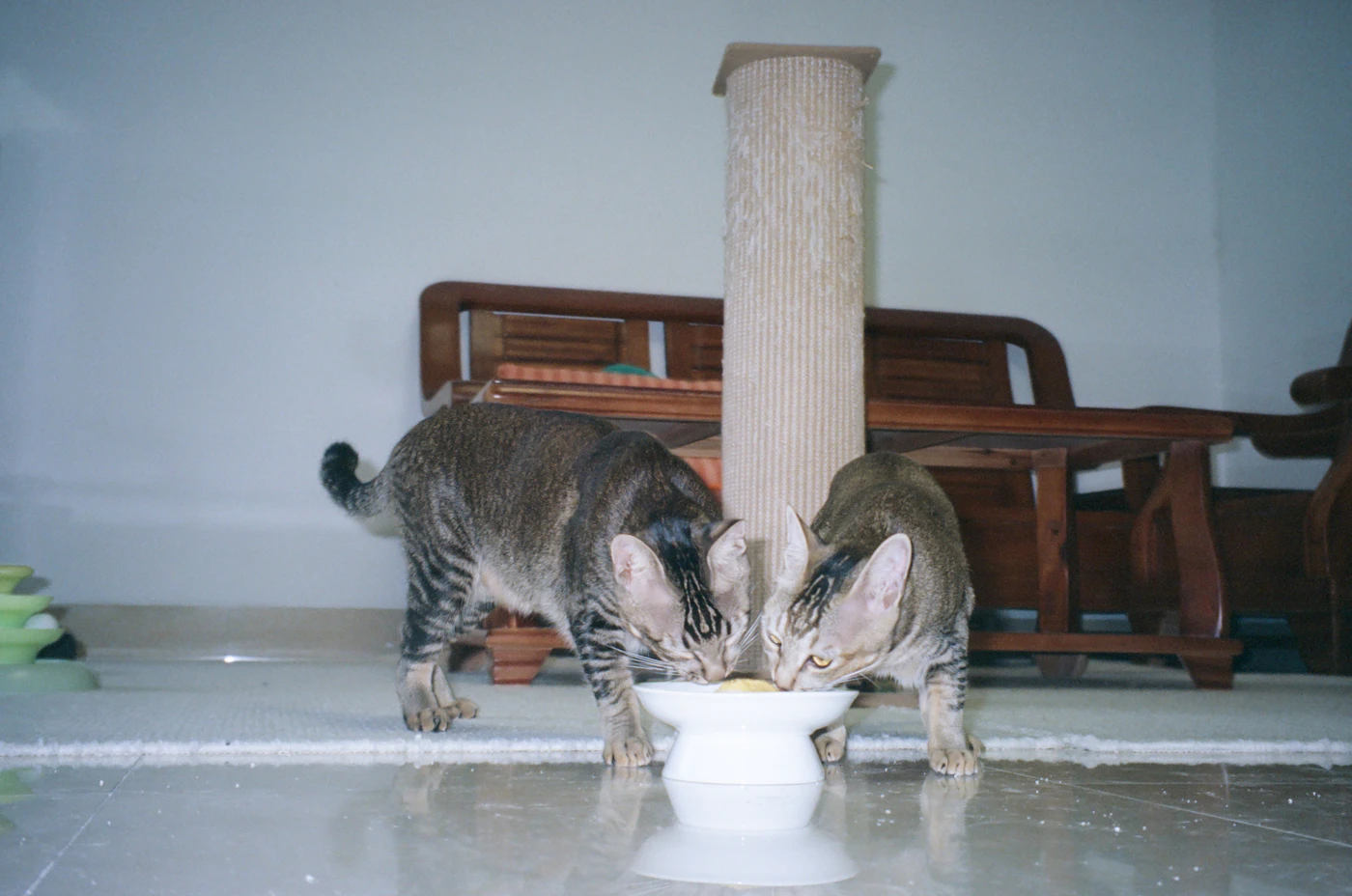
It is easy to assume that because pets share a household, they are comfortable sharing a meal space. In practice, eating is a vulnerable activity for many animals. When bowls are placed side by side, even usually friendly pets can feel that their food is under threat. This proximity often creates low-level stress that owners may not notice until it becomes a bigger problem.
Signs of this tension are not always obvious. Some pets eat very quickly, watch their neighbor out of the corner of an eye, or hover over their bowl long after it is empty. Others may stop eating when another pet walks into the room. In multi-pet homes, this daily pressure can lead to resource guarding, where a pet feels it must protect its food from the others.
A more practical approach is to give each animal its own defined feeding zone. This does not require separate rooms for every meal, but it does mean creating clear physical distance. Consider these options:
- Place bowls on opposite sides of a kitchen or hallway, using a closed door or a baby gate as a visual barrier.
- Feed one pet in a crate or a separate room while the others eat in the main area, then rotate.
- Stagger meal times by ten or fifteen minutes so that each pet eats completely alone.
The goal is to remove the feeling of competition. When a pet knows its food will not be approached during a meal, it can relax, eat at a normal pace, and finish without anxious hovering. If you notice growling, stiffness, or avoidance around mealtimes, or if a pet’s eating habits change suddenly, consult a veterinarian or a qualified animal behavior professional for guidance. Creating calm, separate feeding routines is a simple change that often makes a significant difference in daily household harmony.
Mistake: Ignoring Individual Dietary Needs
It is easy to assume that one bag of food or one standard portion size will work for every pet in the house. After all, feeding time is busy, and it feels simpler to fill each bowl the same way. In practice, though, each animal has nutritional requirements that depend on its age, health status, and daily activity level. A young, growing puppy or kitten needs a different balance of nutrients than a senior pet. A very active dog burns more calories than a couch-loving companion. A pet with a chronic condition may need a specific diet that another pet should not eat.
Feeding everyone the same food or the same amount can lead to gradual weight changes, digestive upset, or missing out on important nutrients. It can also become a safety issue if one pet requires a special prescription diet and another animal eats it consistently. This is not about being overly strict; it is simply about observing your pets and recognizing that their bodies are not interchangeable.
What to do instead:
- Keep a written or mental note of each pet’s target weight and usual body condition, and adjust portions only as their needs change.
- Separate feeding areas, even if only for a few minutes, to ensure each pet finishes its own meal.
- Schedule a check-in with your veterinarian to confirm that each pet’s current food and portion are still appropriate for its life stage and activity level. This is especially important if you have recently adopted a new pet or noticed a change in appetite or weight.
Routine observation and occasional professional guidance will serve you far better than a one-size-fits-all approach.
Mistake: Not Supervising or Monitoring Intake
When multiple pets share a home, mealtime can quickly become a free-for-all. It is tempting to put bowls down and walk away, trusting everyone to eat their own share. However, this approach rarely works as intended. Without supervision, you may not notice which pet finishes first, who is being pushed aside, or whether anyone is skipping meals entirely.
Monitoring intake is about more than just preventing theft from another bowl. It is the only reliable way to notice early changes in appetite, which can be one of the first signs that something is off. A pet that suddenly loses interest in food, or one that finishes and immediately searches for more, deserves attention. You cannot observe these patterns if you are not in the room.
To get a clearer picture of what is happening:
- Stay nearby during meals and watch each pet’s behavior, not just the bowl.
- Use separate feeding areas if any pet guards food or finishes much faster than the others.
- Note which pet eats what, and check whether leftovers are common or unusual for that individual.
- Keep a simple mental or written log of appetite trends over a week or two.
Portion adjustments should follow what you observe, not a fixed scoop size. If one pet is gaining weight while another is losing, the problem may be access, not hunger. When you notice a persistent change in appetite or weight, discuss it with your veterinarian. They can help you set appropriate portion goals based on your pet’s body condition, age, and activity level. Your own observation is a valuable tool, but it works best alongside professional guidance.
Mistake: Overlooking Stress and Behavior Cues
It is easy to focus on the bowls, the portions, and the clock, but the most telling information at feeding time is often silent. A tucked tail, flattened ears, a hard stare, or a pet that suddenly refuses to approach the food area are not just quirks. These are communication signals. When these cues are ignored, a minor worry can grow into a daily ritual of anxiety, and in some cases, a tense situation can turn into a snap or a lunge toward another pet or a person.
Many well-meaning owners assume that a pet who eats quickly is simply enthusiastic. In a multi-pet home, a fast eater is often a nervous eater who is trying to finish before a perceived rival arrives. Similarly, a pet who hangs back may be waiting for the others to finish so it can eat in peace, not politely waiting its turn. The goal is to reduce the pressure around the bowls, not to force a confrontational “practice” session.
Instead of scolding nervous behavior, try these adjustments:
- Move feeding stations to separate rooms or across a visual barrier so pets cannot watch one another.
- Use a predictable routine with a calm voice and slow movements before placing bowls down.
- Reinforce calm behavior with quiet praise before the meal, but avoid hovering or staring at the pet while it eats.
- If a pet shows aggressive or fearful signs consistently, separate them fully at meal times and seek guidance from a qualified animal behavior professional. Do not attempt to “correct” the growl or the freeze yourself.
Feeding should be a safe, neutral event. When the environment feels secure, the appetite usually follows, and the household runs more smoothly.