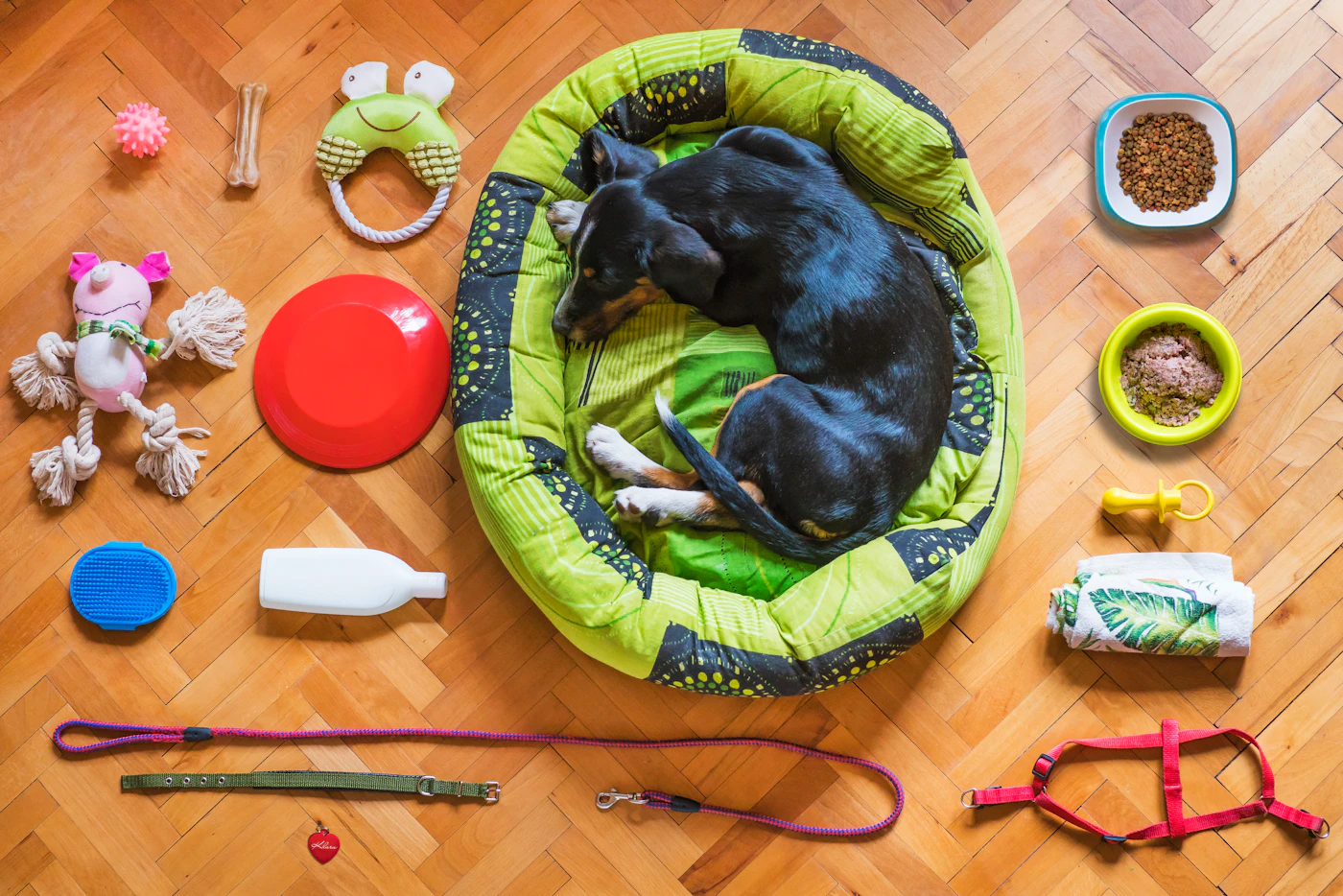
Start With the Daily Essentials: Food, Water, and Bowls
Before anything else, pack the food your pet eats at home. A sudden switch to a new brand or formula while traveling can upset digestion, so carry enough of the regular kibble or canned food for the entire trip. Add a few extra days’ worth in case of delays.
Portion meals ahead of time. Resealable bags or small containers lined up by day make feeding straightforward and keep you from over-pouring at the end of a long drive. If your pet eats twice a day, stick to those same times on the road. A consistent schedule reduces confusion and helps with bathroom timing.
Store dry food in an airtight container away from direct sunlight and heat, especially if it will sit in a car for several hours. Wet food, once opened, needs refrigeration unless it is a single-serve pouch meant for one meal.
- Bowls: Collapsible silicone or fabric bowls are practical for stops and hotel rooms. They fold flat and do not take up much bag space. For water, carry at least one dedicated bowl separate from the food bowl.
- Water supply: Bring tap water from home in a sealed jug, or buy a fresh bottle at your destination. Sudden changes in water can cause stomach upset in some pets. Offer water at every rest stop, even if your pet does not seem thirsty.
- Cleanup: Pack a towel or cloth to wipe bowls after each meal, and rinse them with clean water at the end of the day. Soap is fine, but rinse thoroughly so no residue remains.
Keep the feeding area calm and consistent. A quiet corner of a hotel room or a shaded spot at a rest area works better than a busy sidewalk. If your pet refuses food for more than a day or shows signs of lethargy, vomiting, or diarrhea, contact a veterinarian. Travel stress can affect appetite, but it is always safer to ask a professional than to wait.
Keep Medications and Health Records Within Reach
When you travel with a pet, the supplies you pack matter less than the items you can access quickly in an emergency. Medications and health paperwork belong near the top of your bag, not buried under food and toys. If your pet needs a daily prescription, count out enough doses for the entire trip plus a few extra days in case travel delays come up. Keep each medication in its original pharmacy container. The label carries the drug name, dosage, and your veterinarian’s information, which a new clinic or emergency hospital may need before they can help.
Vaccination records are equally important. Many boarding facilities, groomers, and pet-friendly hotels ask to see proof of rabies and other core vaccines. A printed copy or a photo saved on your phone works fine. Check that the records list your pet’s name, your contact details, and the dates of the most recent shots.
Microchip information is easy to overlook. Before leaving, confirm that the registry has your current phone number. If your pet wanders off in an unfamiliar place, a shelter can only reunite you if they can reach you. Keep the microchip number written down alongside your records.
Finally, carry a recent, clear photo of your pet on your phone. A current image helps you make posters or share details with local authorities if the unthinkable happens.
- Keep medications in original packaging with labels intact.
- Pack printed or digital copies of vaccine records.
- Verify microchip contact information before departure.
- Save a recent photo of your pet on your phone.
Comfort Items That Reduce Travel Stress
Familiar scents and textures can make an unfamiliar space feel safer for a pet. A favorite blanket, bed, or soft toy often works better than any new purchase because it carries the home’s smell. These items give a pet something to settle into, especially after hours in a carrier or vehicle.
When packing comfort items, think about what your pet actually uses at home. A dog that sleeps on a specific cushion will benefit from having that same cushion in a hotel room or at a relative’s house. A cat that kneads a particular fleece throw will likely relax more quickly with it nearby. Even a well-worn T-shirt from a family member can serve the same purpose if placed in a crate or on a bed.
- Choose washable items. Travel means dirt, spills, and accidents. Pick blankets or toys that can be machine washed and dried without damage.
- Keep one item out of rotation. If a favorite toy is irreplaceable, consider leaving it home. Pack a similar but less precious version instead.
- Size matters. A bulky bed may not fit in the car. A smaller mat or folded blanket takes up less space and still provides a familiar surface.
- Introduce new comfort items at home first. If you buy a travel-specific bed, let the pet sleep on it for several nights before the trip so it does not feel foreign.
Comfort items are not just extras. They help reduce stress, which can make travel safer for everyone. A relaxed pet is less likely to pace, whine, or refuse food. If your pet shows signs of severe anxiety during travel, such as excessive drooling, vomiting, or attempts to escape, stop and consult a veterinarian. Medication or behavioral support may be appropriate for some animals, and that decision should involve professional guidance.
Cleaning and Waste Management on the Go
Accidents and messes are part of traveling with pets, but a small amount of preparation keeps them from derailing your day. The goal is to contain and remove waste quickly without relying on harsh chemicals that can irritate your pet’s paws or nose.
Start with the basics: a roll of waste bags and a stash of paper towels. Keep both within easy reach, not buried in the bottom of a suitcase. A dedicated pocket in your travel bag or a small pouch clipped to a leash works well. For solid waste, always bag it promptly and dispose of it in a designated trash receptacle. Never leave bags on trails, sidewalks, or rest areas, even briefly.
For liquid spills or muddy paws, paper towels handle the bulk of the mess. Follow up with a simple dilution of water and a few drops of mild dish soap in a small spray bottle. This mixture is safe for most travel surfaces and rinses clean. Avoid bleach, ammonia-based cleaners, or strong disinfectants in enclosed spaces like a car or hotel room.
A compact spill kit is a worthwhile addition to your routine. A small, resealable container can hold:
- Ten to fifteen folded paper towels
- A few extra waste bags
- A travel-size spray bottle with your soap-and-water mix
- A small, sealable wet bag for soiled towels or soiled pet bedding
When you clean a mess inside a vehicle or lodging, treat it as you would at home: blot first, then spot clean, and allow the area to dry completely. If the accident involves large amounts of fluid, a stain, or a persistent odor that does not lift with your basic kit, contact a professional cleaning service. Do not attempt deep extraction with household tools, as improper moisture removal can lead to mildew.
Keep used towels and bags sealed until you reach a proper disposal point, and wash any reusable cloth items separately when you return home.
Safety Gear for Every Mode of Travel
Before any trip, check that your pet’s gear fits well and is in good condition. A loose harness or a cracked carrier can fail at the worst moment. Measure your pet’s chest, neck, and length before buying or borrowing anything. If you are unsure about sizing, try the gear on at home and watch for chafing or restricted movement.
For car travel, a well-fitted harness that clips into the seat belt system is a practical choice for most dogs. Look for a design that keeps the dog upright without allowing too much roaming. Cats and small dogs generally do better in a hard-sided carrier that is strapped or secured on the seat. Never place a carrier in the front seat with an active airbag.
For air travel, rules differ by airline and by the pet’s size. Check the airline’s current requirements for carrier dimensions, ventilation, and under-seat fit before booking. For cabin travel, a soft-sided carrier that fits under the seat is common. For cargo travel, use an approved, sturdy crate with proper ventilation and a secure latch. Write your contact information directly on the crate and attach a copy of your itinerary.
- Try the harness or carrier on your pet for several short sessions before the trip.
- Make sure the buckle or clip is not rusted, cracked, or difficult to release.
- For any crate, confirm the door latch cannot be opened by paw or nose.
- If you are flying, call the airline or check its website a few days before departure for the latest rules.
When in doubt, have a professional fit the harness or carrier at a reputable pet supply store. A safe fit is not about style; it is about preventing injury during sudden stops or turbulence.
Observation: Reading Your Pet’s Signals During Travel
Your pet cannot tell you when a car ride is becoming too much, so it is your job to watch for quiet clues that something feels off. Stress and motion discomfort often show up gradually, and catching them early makes the trip easier for everyone.
Pay attention to these common signs of unease:
- Excessive panting that is not tied to warm weather or recent exercise
- Drooling or lip licking beyond the usual amount
- Hiding or trying to burrow into a carrier or seat corner
- Whining, trembling, or a tucked tail
- Refusing treats or water that they would normally accept
When you notice any of these, plan a stop at a safe, quiet spot. Let your pet stretch on a leash, offer a small amount of water, and give them a few minutes away from the motion of the vehicle. A short break every couple of hours is a simple, practical habit that helps most pets reset.
Never leave your pet alone in a parked vehicle, even for a quick errand. Temperatures inside a car can change quickly, and the unfamiliar surroundings can raise anxiety. If you cannot bring your pet with you, leave them at home instead.
Most travel-related stress settles once the ride ends. However, if signs like heavy panting, repeated drooling, or listlessness continue for hours after you arrive, contact your veterinarian. They can help you rule out underlying health concerns and suggest ways to make future trips more comfortable. Your regular observation is the first line of defense, and knowing when to ask for help is part of responsible travel planning.