Why a Routine Matters More Than You Think
When you have multiple pets, feeding time can feel like a chaotic free-for-all. But moving toward a consistent daily schedule does more than just prevent food stealing. A regular rhythm supports your pets' digestive systems, which tend to operate best when meals arrive at predictable intervals. This steadiness helps avoid the gassy, upset stomachs that can come from erratic snacking or long gaps between meals.
Behavior also improves with a clear routine. Pets learn to anticipate when food is coming, which reduces the anxious pacing, whining, or pawing at cabinets that often emerges when they are unsure of the plan. Knowing that a meal is coming at a set time gives them a sense of security, and that calmness often carries through the rest of the day.
For owners, a routine is a simple tool for observation. When you feed at regular times, you naturally notice small changes in appetite, drinking habits, or energy levels. A pet who suddenly leaves food behind or finishes much faster than usual may be signaling something. Catching those subtle shifts early gives you a head start on addressing concerns with your veterinarian.
- Keep meal times within a narrow window each day to support digestion.
- Use the same feeding spot for each pet to reduce territorial tension.
- Watch how each pet reacts to mealtime as a low-stress health check.
Finally, a routine lowers stress for everyone in the house. When meals are predictable, there is less guesswork and fewer negotiation battles with furry family members. You spend less energy managing chaos and more time enjoying the quiet moments after bowls are empty.
Setting Up Separate Feeding Stations
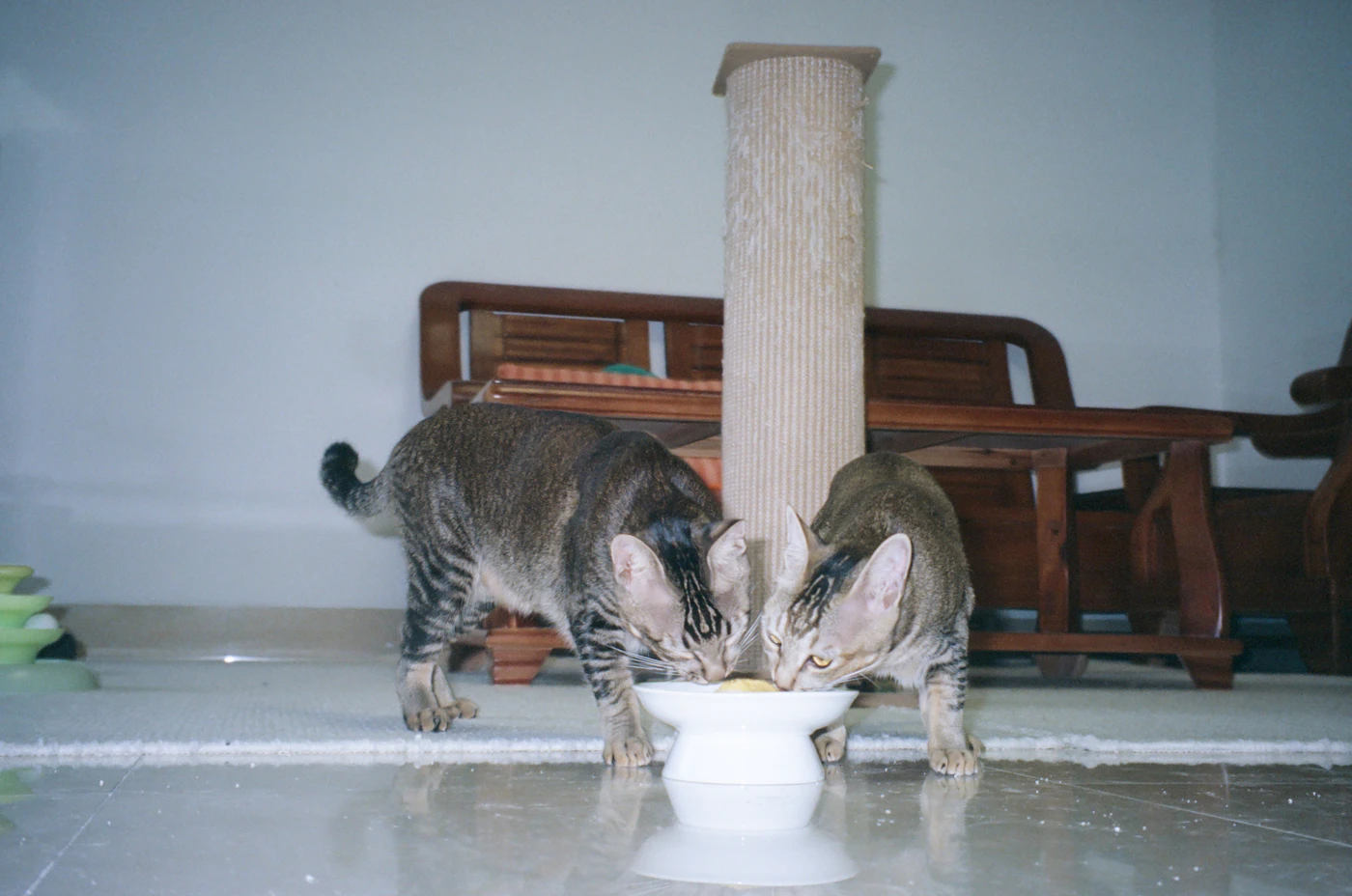
The simplest way to manage a multi-pet household is to give each animal its own clear, dedicated spot for meals. This does more than just prevent food stealing; it reduces the tension that can lead to food aggression. When a pet knows exactly where their bowl will appear, they are less likely to hover over another’s meal. It also gives you a straightforward way to see who has finished and who is being picky.
Start by choosing locations that are naturally separated. A good option is to place bowls in different rooms or at least on opposite sides of a large kitchen. If you have a dog that likes to rush, a baby gate across a doorway works well for a cat’s station, giving the smaller pet a quiet space to eat without feeling rushed. For dogs that live together, placing bowls on opposite sides of a low table can work, but make sure there is enough distance between them so each dog feels they have their own territory.
Use visual and spatial cues to make the routine obvious.
- Color coding: A red bowl for one pet and a blue bowl for another helps everyone, including you, know which is which at a glance.
- Consistent location: Do not move the stations around. The habit of walking to the same corner or mat is a powerful signal that mealtime is starting.
- Individual mats: A small placemat under each bowl gives each pet a defined boundary to wait on while you prepare their food.
You should always be present during feeding, at least initially. You do not need to hover, but stand where you can watch both animals. This lets you spot signs of stiffness or tension early. If you see a pet staring intensely at a neighbor’s bowl before their own, gently redirect them to their own mat. This is an everyday management task, not a behavior modification program. If hissing, growling, or snapping occurs regularly, or if one pet is too afraid to approach their station at all, you should consult a professional animal behaviorist for guidance.
Building a Daily Schedule That Works for You
The goal of a feeding schedule isn’t to lock yourself to a stopwatch. It’s to create a predictable rhythm that your pets can rely on and that you can actually keep up with on busy days. Instead of aiming for the same minute every day, focus on the same order of events. This consistency helps pets feel settled and makes it easier to notice when something is off with their appetite.
Start by anchoring the day with two fixed meal times—one in the morning and one in the early evening. Choose windows that fit your existing routine, such as right after your first cup of coffee or shortly after you get home. If your schedule shifts on weekends, keep the same relative spacing between meals rather than moving them drastically. A difference of an hour is fine; a difference of five hours is not.
After each meal, build in a short observation window. This is not a formal checklist, but a quiet moment to watch each pet for a few minutes. Look for normal eating pace, comfortable posture, and typical interest in food. For multi-pet households, this is also the time to confirm that everyone had access to their own bowl and that no one is lingering near another’s dish.
- For kittens or puppies: Plan for an extra small meal or snack during the day, keeping the morning and evening anchors consistent.
- For senior pets: Keep the same meal times but allow a longer, slower eating period and a more relaxed post-meal pause.
- For pets with different diets: Use the observation window to keep pets in their designated eating spots before letting them mingle.
Adjust the rhythm gradually over a week or two if you need to shift meal times. If a pet consistently leaves food, loses interest, or shows any discomfort after eating, note the pattern and consult your veterinarian. A schedule is a tool for awareness, not a substitute for professional advice.
Simple Tools to Track What Each Pet Eats
When you feed multiple pets, memory gets fuzzy fast. A small investment in a simple tracking method can quickly show you who is eating well and who is being pushed aside at the bowl. The goal here is clarity, not a second job, so avoid anything with complicated charts or syncing features that require daily upkeep.
The most dependable options are often the least flashy:
- A whiteboard. Keep it near the feeding station. Use a column for each pet’s name and a marker to jot down the date and a quick note. Erasing at the end of the day is satisfying and resets the system.
- A spiral notebook. A dedicated page per pet allows you to flip back over a week or two to spot patterns, such as a gradual decline in enthusiasm that might warrant a call to your vet.
- A basic notes app. If you always have your phone in hand, a simple shared note with a date and time stamp for each pet works fine. Choose one without reminders or badges, as those become noise.
Regardless of the tool, know what to record. Do not weigh portions obsessively. Instead, write down three things: the amount you offered (a rough description like “half cup” or “full bowl” is enough), the level of enthusiasm (from “finished fast” to “picked at it”), and what was left behind. Leftovers are your most honest signal. A pet who leaves a clean bowl every day is different from one who walks away with food remaining.
Keep the ritual to under a minute. If it starts to feel like a chore, you will abandon it, and the data will stop. The only purpose of this record is to build a quiet baseline for each animal, so you notice a change early rather than after a week of missing meals.
Managing Slow Eaters and Fast Eaters
When one pet inhales dinner in under a minute and the other grazes for twenty, the meal can feel more like a negotiation than a routine. The fast eater often finishes and immediately tries to trade bowls, while the slow eater may abandon their food entirely if they feel rushed or watched too closely. This dynamic is common, but it does not require elaborate equipment or constant vigilance. A few simple adjustments to your setup can make a meaningful difference.
Start by creating physical distance between the bowls. Feeding in separate rooms, or at least on opposite sides of a room with a visual barrier like a chair or a low gate, gives the slower pet a chance to eat without sensing competition. Staggered start times also help. Give the slower eater a five-minute head start so they establish a comfortable rhythm before the faster one begins. During this time, you can offer the faster pet a small, safe activity, such as a treat-dispensing toy that requires some rolling and pawing, to keep them occupied.
- Puzzle feeders for the fast eater can slow their pace naturally, making the meal last longer and reducing their urge to scavenge afterward.
- Supervised feeding is most useful during the first few weeks of a new routine. Stay calm, move quietly, and resist the urge to hover directly over the slower pet.
Observation is your best tool. Watch for signs of stress, such as a tucked tail, flattened ears, or a pet that stops eating entirely when another approaches. If either pet seems anxious, skip the puzzle feeders and return to separate rooms without comment. Routine should feel calm and predictable, not like a performance. If you notice persistent food guarding, growling, or weight changes in either pet, consult your veterinarian for guidance suited to your household. A peaceful meal is not about speed—it is about giving each pet a fair, low-pressure chance to eat.
When to Adjust the Routine for Health or Age
A feeding schedule that works in a young, active household will not hold up forever. Kittens need more frequent meals, senior pets often prefer smaller portions spread through the day, and a pet with a chronic condition may require a timing shift that the rest of the group simply has to accommodate. The goal is not to keep the routine perfect, but to keep it workable for everyone sharing the kitchen floor.
Before you change anything, watch for signs that something medical, not behavioral, is at play. A sudden appetite change, unplanned weight loss or gain, vomiting shortly after a meal, or a pet that suddenly guards its bowl when it never did before are all reasons to pause and call your veterinarian. Do not try to solve these with a new feeding plan. Let a professional rule out underlying issues first, then build the new routine around their guidance.
When you do get the go-ahead to adjust, make it gradual. A sudden switch in meal timing or portion size can cause digestive upset or anxiety in pets that rely on predictability. Move meal times by small increments over several days, and introduce any new food by mixing it with the old. For multi-pet homes, separate feeding areas or staggered start times can reduce competition without turning every meal into a management project.
- Keep a simple log of each pet’s appetite and weight trends so changes are visible early.
- Adjust portion sizes slowly, and only if the veterinarian recommends it.
- Expect the routine to shift again with the next life stage; flexibility is part of the plan.
Simple observation is your best tool. A pet that cleans its bowl but seems dissatisfied, or one that walks away mid-meal, is telling you something. Note it, adjust gently, and consult a professional when the signals are unclear.