Why Indoor Entertainment Matters
When the weather turns or your dog’s outdoor time is limited for any reason, the four walls of your home can start to feel small to a restless pet. A dog that is under-stimulated is not being stubborn; they are simply looking for an outlet. Without a plan, that energy usually finds a way out through barking, chewing, or digging at the carpet. Indoor entertainment is not about replacing a good walk—it is about filling the gaps in the day with purposeful activity.
Mental work is often more tiring than physical exercise. A short session of nose work or a puzzle feeder can satisfy a dog’s natural drive to hunt and solve problems, leaving them calmly settled rather than wired. This kind of engagement also builds your dog’s confidence, because they learn that trying new things leads to a reward they can predict.
For dogs that cannot roam far—senior pets, those recovering from an injury, or breeds that are not suited to long hikes—indoor activities become the main source of daily stimulation. A simple routine that mixes training, play, and quiet time tells your dog what to expect, which lowers their anxiety.
- Prevents boredom: A busy mind is less likely to fixate on destructive habits.
- Strengthens trust: Working together on a game or trick reinforces your role as a reliable guide.
- Keeps skills sharp: Regular indoor practice maintains obedience cues for when you are back outside.
The goal is not to exhaust your dog, but to give them a reason to feel content inside the home. When that need is met consistently, you’ll find that quiet evenings become the norm rather than the exception.
Setting Up a Dog-Friendly Zone
Creating a designated indoor area for your dog is one of the simplest ways to reduce household chaos. When your dog knows exactly where to relax and play, they are less likely to wander, chew on furniture, or become restless. The goal is not to confine your dog for long stretches, but to offer a comfortable home base that is easy to manage daily.
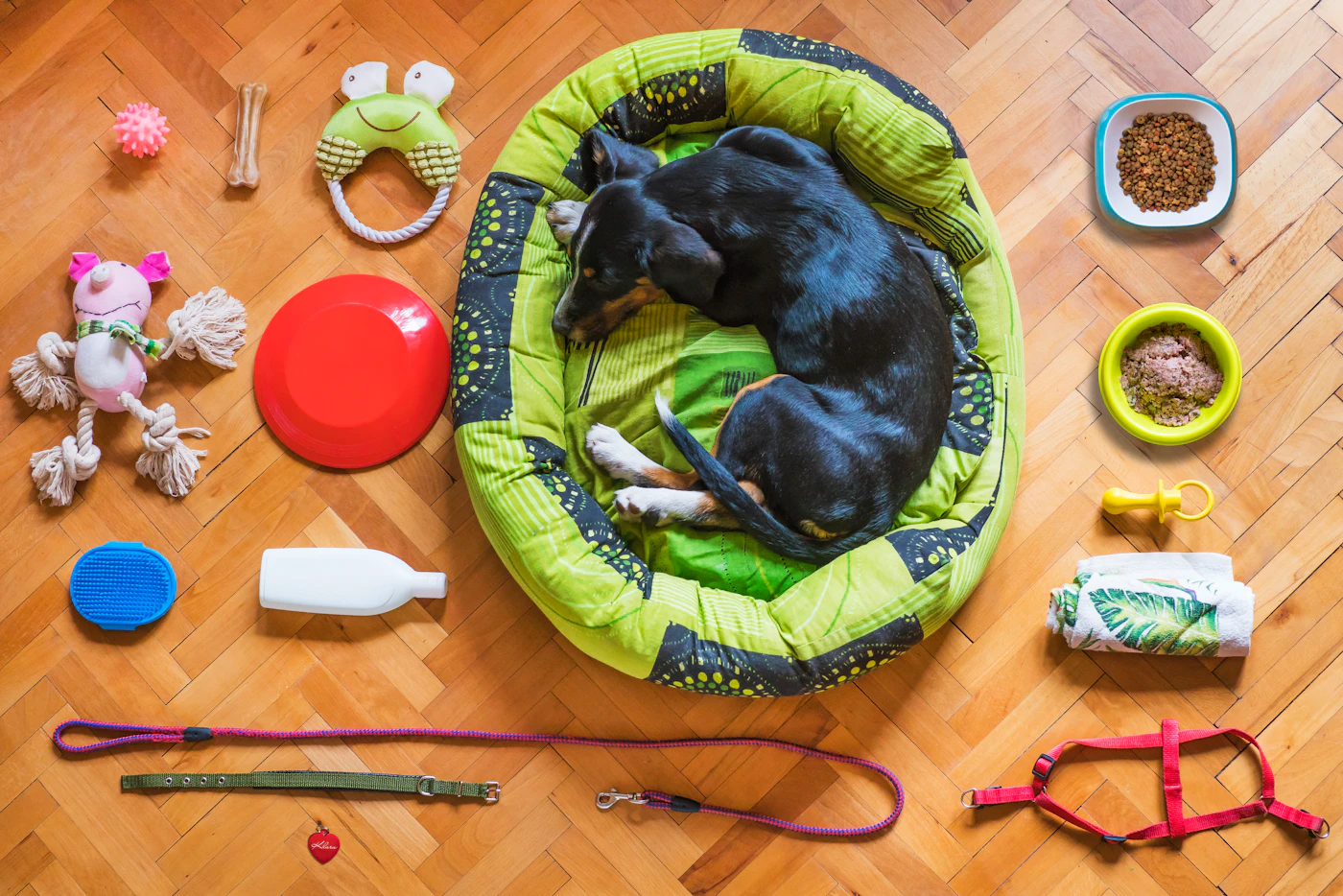
Start by choosing a low-traffic spot in your home. A corner of the living room, a section of the kitchen, or a spare room works well because these areas are near the family but still calm. Lay down a washable mat or a durable rug to define the space. This also protects your flooring from spills or active play.
Next, make sure the essentials are within easy reach:
- Water: Place a sturdy, tip-proof bowl in a consistent location. Check and refill it at least twice daily.
- Potty area: If your dog cannot go outside for a while, set up a patch of artificial turf, a training pad tray, or a similar designated spot on a waterproof liner. Keep it separate from where they sleep and eat.
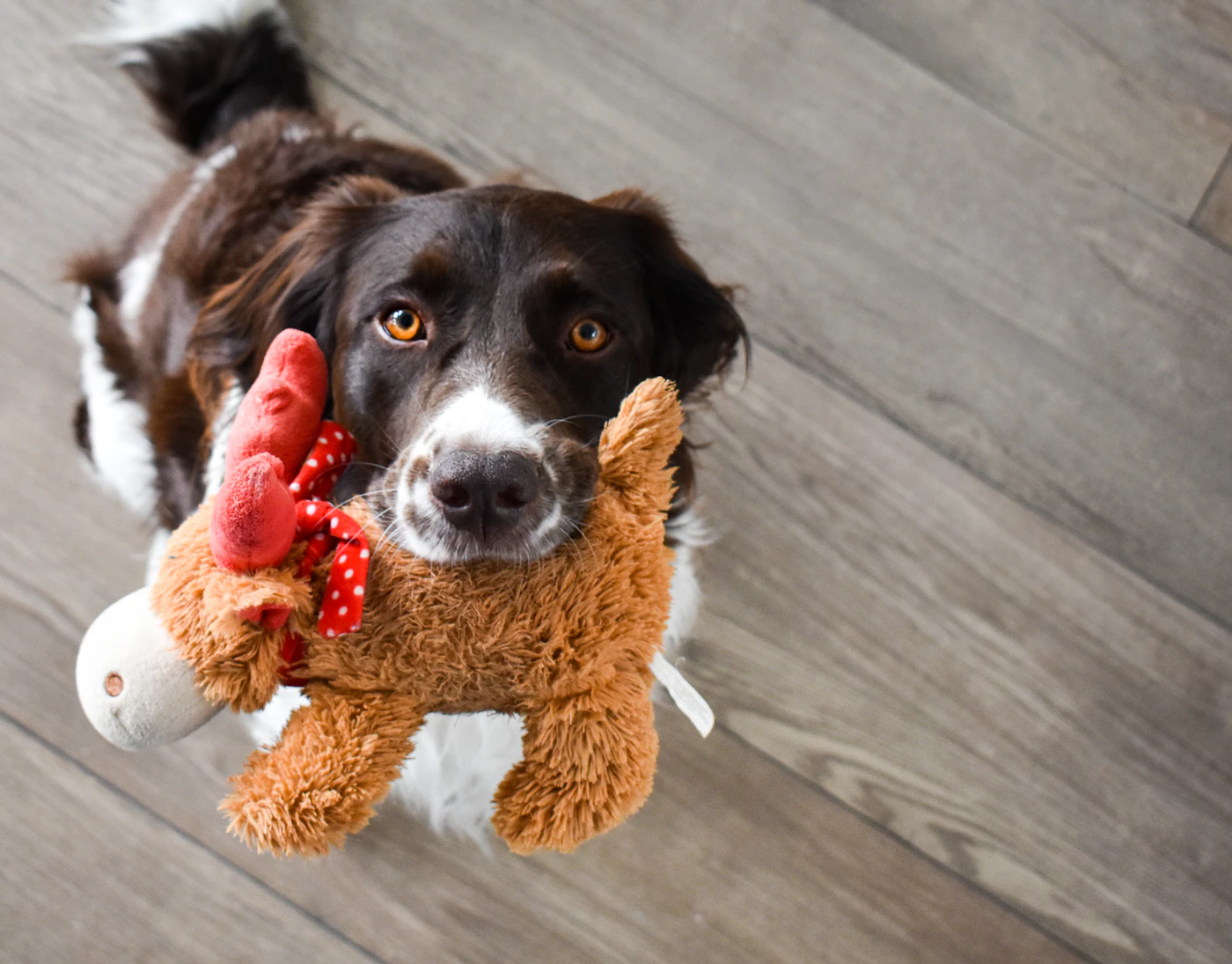
- Toys: Rotate a small selection of toys every few days. This means offering a few chew toys, a puzzle toy, and a soft plush toy. Storing the rest out of sight keeps the area tidy and keeps the offered toys novel.
Keep the zone clear of electrical cords, small objects, or anything your dog could swallow. If you use an exercise pen or baby gate, make sure it is properly secured and tall enough for your dog’s size. Observe how your dog uses the space over the first week, then shift the layout to match their habits. This setup does not need to be elaborate, but it should be consistent. When the zone is calm and predictable, your dog will settle in more easily.
Daily Physical Exercise: Walks and Indoor Play
A dependable walk schedule forms the backbone of your dog’s daily activity. Most adult dogs do well with at least one solid walk per day, while higher-energy breeds may need two. The exact distance and pace matter less than consistency. Try to leave at roughly the same times each day so your dog knows what to expect. Walks are not just for bathroom breaks; they provide changing scents, new views, and a chance to stretch muscles.
Indoor play is a useful supplement, especially on days when the weather makes a long walk unpleasant. Simple games can burn mental energy without requiring a large yard:
- Fetch in a hallway: A soft toy tossed a short distance works well in tight spaces.
- Tug-of-war: Use a designated rope toy and let your dog win occasionally to keep the game fun.
- Hide-and-seek: Have your dog stay while you hide in another room, then call them to find you. You can also hide a few treats around the house.
A practical schedule might look like this: a brisk morning walk before breakfast, a short midday play session of ten to fifteen minutes, and a slower evening walk after dinner. Keep the evening walk relaxed so your dog can wind down before bed.
Watch your dog’s cues during play. If they flop down, pant heavily, or lose interest, that is the signal to stop. Rest is part of the routine, not a failure. A tired dog is calmer, but an overstimulated dog can become restless. Balance exertion with quiet time, and adjust the length of walks based on your dog’s age, breed, and overall energy level. When in doubt about safe activity levels, ask your veterinarian for guidance suited to your individual dog.
Mental Stimulation: Puzzle Toys and Training Games
A tired dog is not always a physically exhausted one. Many owners find that a focused mental workout can be just as effective as a long walk, if not more so. Brain games tap into your dog’s natural problem-solving instincts, providing satisfaction that running around the yard often cannot match. These activities also help build calmness and confidence, making them a valuable part of an indoor routine.
Food puzzles are a practical starting point. These toys require your dog to nudge, roll, or slide pieces to release kibble or a small treat. Start with an easy setting so your dog can learn the motion without getting frustrated, then gradually make it harder as they catch on. Rotate which puzzle you offer each day so the novelty does not wear off. If you do not have a commercial puzzle, a simple muffin tin with tennis balls covering the cups works as a homemade alternative.
Scent games are another low-mess option. Hide a few pieces of your dog’s regular food around a room and let them find it using their nose. Begin with easy spots where the food is visible, then move to behind a chair leg or under a towel edge. This taps into an instinct they already have, and it requires no special equipment.
Short, structured training sessions also count as mental work. Aim for a few minutes of asking for known behaviors like sit, down, or stay. You can add a simple trick, such as spinning in a circle. Keep the tone positive and end before your dog loses interest.
Always supervise your dog with any puzzle toy. If pieces are chewed off or become a choking hazard, remove the toy and replace it with a safer option. For any training concerns that involve aggression or severe anxiety, consult a qualified professional for guidance.
Building a Predictable Daily Schedule
Dogs read the world through patterns. When meals, walks, and play happen at roughly the same time each day, your dog learns what to expect next. That sense of order can lower stress and reduce restless, attention-seeking behavior. You do not need a minute-by-minute plan; a simple rhythm is enough.
Start with the anchors of the day. Feed meals at consistent times, and schedule a walk or outdoor break shortly after. Most dogs do well with a morning outing, an afternoon pause, and a final trip before bed. Keep these times steady even on weekends. If your schedule shifts, move everything by the same amount rather than skipping pieces.
Between those anchors, build in short, focused blocks:
- Play sessions of ten to fifteen minutes, two or three times a day.
- One training block, about the same length, for basic cues or new tricks.
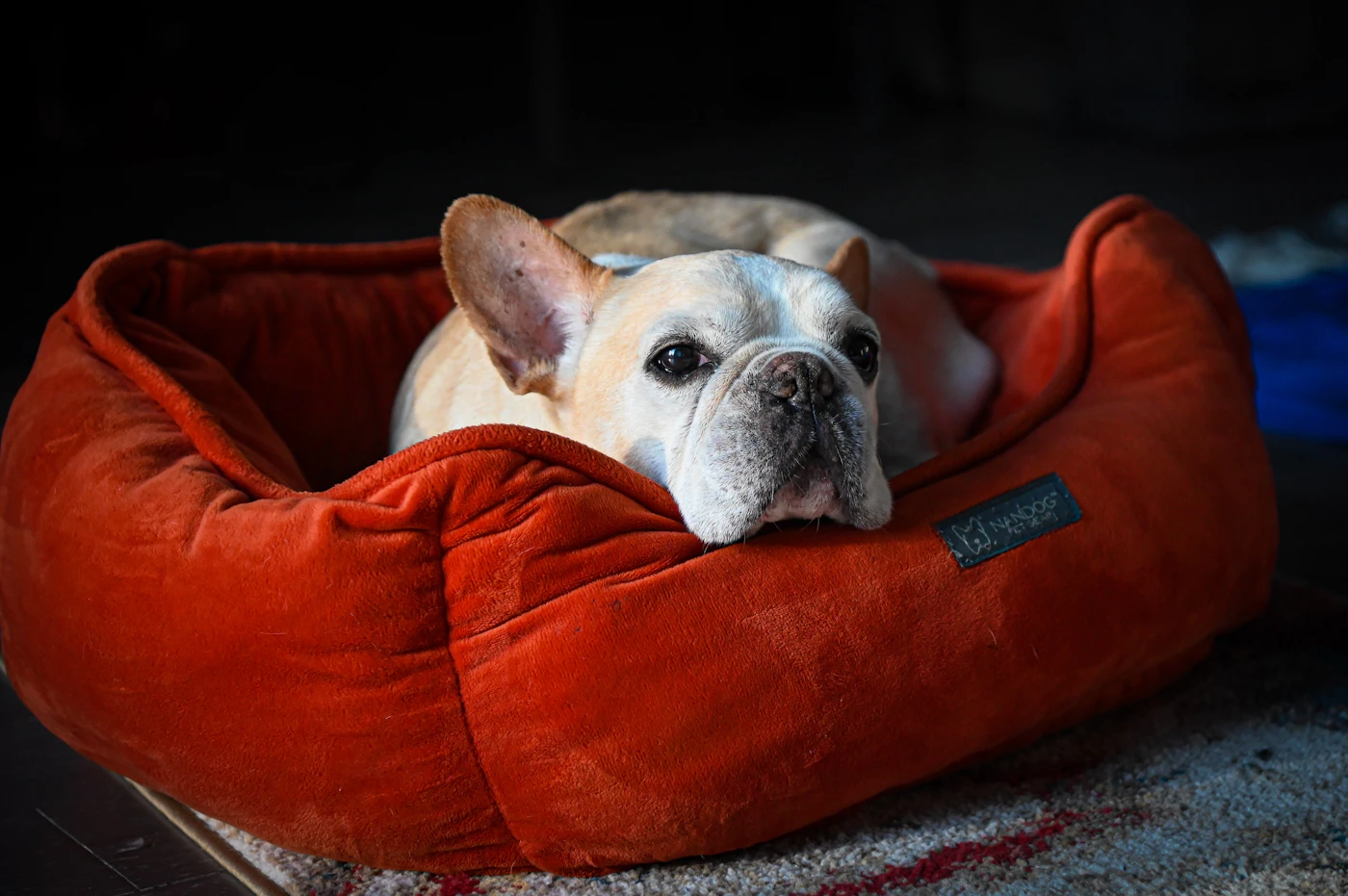
- Quiet time after meals or play, when the dog is encouraged to settle on a mat or bed.
Quiet time matters as much as activity. It teaches your dog to relax without needing your attention. Use a low-value chew or a stuffed toy during this window, and keep your voice calm and minimal. Over time, your dog will begin to associate these moments with rest.
You can vary the order of play and training to suit your energy level, but try to keep the daily structure intact. If a walk is too short due to weather, add an extra indoor play break to make up the difference. The goal is a routine that feels steady, not rigid. A predictable day gives your dog a clear map, and that makes an indoor life far easier for both of you.
Avoiding Common Pitfalls and Knowing When to Rest
A well-intentioned indoor routine can quickly backfire if it becomes too demanding. One of the most frequent missteps is keeping every toy within reach at all times. When a dog sees the same dozen items day after day, they lose their novelty and value. Instead, rotate a small selection every few days. This simple change keeps familiar objects interesting without requiring you to buy anything new.
Overstimulation is another quiet problem. A dog that is constantly invited to play, chase, or tug may not know how to settle on their own. Watch for signs that the fun has tipped into stress: pacing, frequent lip licking, or a sudden loss of interest in a treat they usually love. These cues mean it is time to stop, not to switch games. End the session calmly, offer water, and let them find a quiet spot.
Rest is not a failure of your plan. It is part of the plan. Most dogs benefit from several clear breaks during the day where they are simply left alone to nap. If you notice your dog whining, hiding, or refusing to engage even after a break, that is a signal to step back. Persistent changes in energy, appetite, or behavior are worth a conversation with your veterinarian. They can help rule out discomfort or health concerns that no amount of puzzle toys will fix.
- Rotate toys weekly to keep them fresh.
- Stop play at the first sign of fatigue, not after.
- Allow quiet, unstructured downtime every day.
- Seek professional advice for ongoing mood or energy shifts.