Why Grand Ambitions Fail and Tiny Leaps Succeed
Most people do not fail at sketching because they lack talent. They fail because they sit down with an open sketchbook and expect a complete, polished drawing to appear. That pressure creates a mental wall. The blank page feels like a test, and the mind quickly decides that doing anything else is more comfortable. This is why a goal like “sketch every day for an hour” usually collapses within the first week. The goal is not unreasonable, but the jump from zero to that routine is too steep.
Psychologically, a large goal triggers a stress response. The brain perceives the task as a threat rather than an opportunity. It looks for the easiest way to relieve that tension, which often means procrastination. The key is to shrink the action until it feels almost too easy to matter.
Instead of aiming for a full drawing, promise yourself one simple act: open the sketchbook. Or draw a single line across the page. Or sketch one everyday object for sixty seconds. These tiny leaps bypass the inner critic because there is no room for judgement. Once the motion starts, momentum often carries you further, but the rule is that the tiny step is the only commitment.
- Anchor the habit: Attach the sketch to an existing routine, like making morning coffee.
- Lower the setup cost: Leave a pencil and paper on the kitchen counter, not in a drawer.
- Accept imperfection: The goal is to build the repetition, not to produce a gallery piece.
When the barrier to starting is almost removed, the daily act becomes automatic. Over weeks, those single lines accumulate into a genuine practice, and the original grand ambition becomes reachable—not because you forced it, but because you stopped fighting it.
The Five-Minute Rule: Lower the Bar on Purpose
The most common reason a sketching habit stalls is not a lack of skill or time. It is the quiet pressure to produce something worthwhile. When you sit down with a blank page and expect a finished piece, the effort feels heavy before you even pick up a pencil. The solution is not more discipline; it is a smaller commitment.
Try this: set a timer for five minutes and draw anything at all. A coffee mug, your own hand, the view out the window, or simply a series of overlapping circles. The goal is not a polished sketch. The goal is to get your hand moving past the initial friction. Once you start, the mental barrier often drops, and you may find yourself continuing well past the timer. If you do not, that is fine. Five minutes of marks on paper still counts as a session.
Useful ways to make this work consistently:
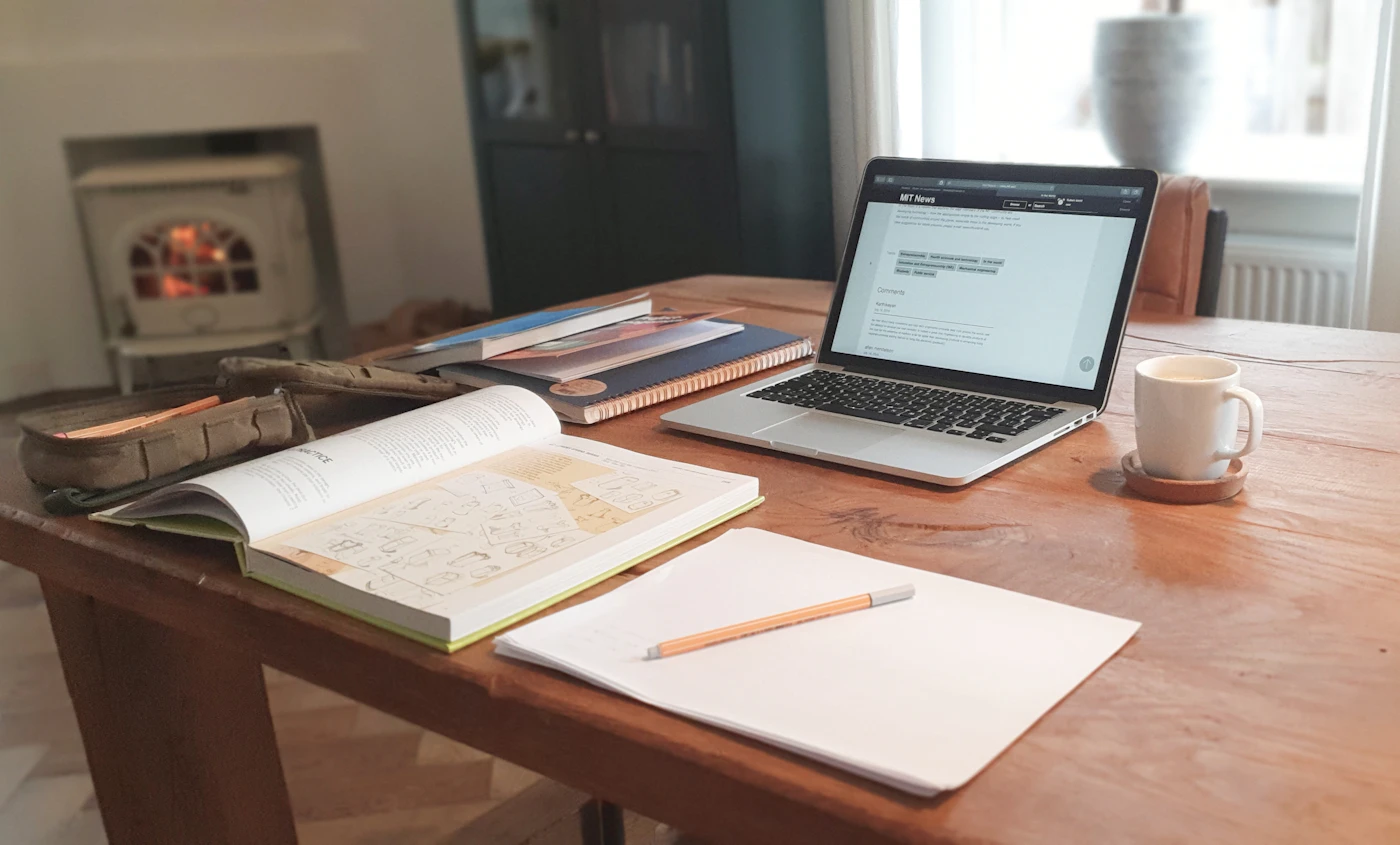
- Keep a dedicated sketchbook and pencil on a table, not tucked in a drawer. Visual reminders reduce the effort to start.
- Pair the five minutes with a daily routine you already have, such as your morning coffee or after dinner.
- Do not judge the result. Flip the page if you dislike the drawing. The point is frequency, not quality.
- Set the timer on your phone, but place it face down so you are not tempted to check other notifications.
A common error is skipping the timer and promising yourself that you will draw for as long as you feel inspired. That vagueness invites procrastination. A concrete five-minute block is a non-negotiable, low-stakes contract with yourself. Over time, this small anchor helps you build a regular practice without relying on mood or motivation. The habit becomes the point, and the sketches become a byproduct you can look back on with surprise.
Your Sketch Kit: Making Starting Effortless
The biggest obstacle to sketching at home is usually not a lack of skill or time—it’s the friction of gathering supplies. A sketchbook buried in a drawer, pencils in another room, and an eraser lost somewhere in between can be enough to derail the habit before you even begin. The fix is simple: build a minimal kit and leave it visible.
Your goal is to reduce the steps between deciding to sketch and actually putting pen to paper. A dedicated small tray, a shallow bowl, or even a clear zip pouch on your desk or coffee table works well. You want the kit to occupy a permanent, obvious spot in the room where you usually sit. If you must dig for it, the habit will likely stay on the 'someday' list.
Here’s what to include:
- One sketchbook: A sturdy, spiral-bound or hardcover option that lies flat on its own. Size doesn’t matter much; choose one that fits your normal sitting area.
- Two writing tools: A standard graphite pencil (HB or 2B) and a fine-tipped black pen. Keep them both with the book at all times.
- One eraser: A soft vinyl or kneaded eraser—nothing fancy.
Keep the kit limited to these three items. The temptation to add markers, colored pencils, or a ruler adds decision fatigue. You want a setup that requires zero choices beyond 'sketch now' or 'sketch later.' If you prefer a different medium—like charcoal or a brush pen—swap the tools out, but keep the kit equally small.
One common mistake is hiding the kit away for guests. Keep it out in the open, even if it looks slightly untidy. A visible kit is a reminder, not a decoration. When you see it repeatedly, the impulse to sketch grows easier to act on. That’s the entire point: effortless starting becomes the default.
Anchoring: Pair Sketching with an Existing Routine
The hardest part of a new sketching habit is often simply remembering to pick up the pencil. You might have good intentions after dinner, but by then, the day’s momentum has carried you elsewhere. Instead of relying on willpower alone, try tying your sketchbook to something you already do without thinking. This is called anchoring, and it turns a vague goal into an automatic cue.
Look at the natural pauses in your day. Do you pour a cup of coffee in the morning? Keep a small sketchbook and a pen right next to the mug. Sketch for the few minutes it takes for your drink to cool. Do you take a lunch break away from your desk? Slip a pocket-size notebook into your bag and commit to one quick drawing of your plate before you eat. The act of eating becomes the trigger.
A few practical tips for making this stick:
- Choose one anchor only. Trying to attach sketching to both your morning coffee and your lunch break dilutes the cue. Pick the one that feels most reliable this week.
- Leave the supplies visible. If your sketchbook is buried in a drawer, the anchor loses its power. The book should be physically in the path of your established routine.
- Keep it short. The goal is the prompt to start, not a masterpiece. A five-minute sketch is a complete success.
- Use a dedicated pen. Avoid the friction of sharpening a pencil or hunting for a working pen. Keep one that you don’t mind using quickly.
You are not adding a new block of time to your day; you are merely filling a pause that already exists. Within a couple of weeks, the routine will likely feel incomplete without your sketchbook nearby.
Embrace Imperfection: The Ugly Sketch Wins
The first real obstacle to a home sketching habit is rarely a lack of paper or time. It is the quiet voice that says a drawing must look good before it is allowed to exist. You sit down, pencil ready, and then stop because the image in your head will not translate cleanly to the page. That hesitation, repeated daily, is what stalls the habit before it starts.
Give yourself permission to make drawings that are genuinely bad. In fact, aim for it. A page of rushed, lopsided, and messy lines is still a page of practice. It builds the physical connection between your eye and your hand. Every awkward mark teaches you something about pressure, proportion, or speed that a clean, careful drawing never will. The ugly sketch is not a failed draft; it is the work itself.
To make this easier, build a few small rules into your routine:
- Limit the time. Set a short window for each sketch, just enough to capture the basic shapes. When the timer ends, stop, even if it is unfinished.
- Use cheap paper. A notebook you do not mind filling with missteps removes the pressure to conserve each page.
- Do not erase. Draw over the mistake, or leave it alone. The next line matters more than fixing the last one.
Treat your sketchbook like a laboratory, not a gallery. The goal is volume and repetition, not a polished portfolio. Over several weeks, you will notice that the "ugly" drawings become less chaotic, and the habit feels less like a performance and more like a conversation with the page. That shift is the real progress worth keeping.
Track and Celebrate Small Victories
The biggest threat to a new sketching habit is the quiet feeling that you aren’t getting anywhere. You finish a page, close the book, and a week later you can’t remember what you drew. Without a visible record of your effort, the habit stays fragile. A simple tracking system fixes this because it turns an abstract goal into a concrete chain of evidence.
You don’t need an app or a fancy planner. A plain notebook page with a list of dates works well. Each time you sit down to sketch, put a small mark next to that day—a dot, a check, or a tiny thumbnail of what you drew. Keep the tracker in the same book you sketch in so you don’t have to remember a separate step. The goal is to create a visual string of consistent days, not to judge the quality of any single drawing.
Celebration matters just as much as tracking. A celebration doesn’t mean a reward like a treat or a purchase. It can be as simple as pausing for a few seconds to acknowledge that you showed up. Before you close your sketchbook, look at the mark you just made and say one honest thing about the session, such as “I got the cup shape better today” or “I tried a new pen.” This small verbal check closes the habit loop by giving your brain a moment of satisfaction linked to the action itself.
Common mistakes to avoid:
- Overcomplicating the tracker with colors, stickers, or detailed notes before you start.
- Using the tracker as a judge of quality instead of a record of consistency.
- Skipping the brief pause to acknowledge what you did.
Once you have a few weeks of marks on the page, you’ll have something more useful than a routine—you’ll have proof that effort compounds, even when individual sketches feel ordinary.