Why Most Sketching Habits Fail
Most people don’t give up drawing because they lack talent. They give up because the routine they set up is designed to fail from the start. Understanding the common pitfalls can help you spot them before they take hold.
The most frequent culprit is perfectionism. When you expect every page to look like a finished piece, a single “bad” sketch feels like a defeat. This mindset turns a relaxing practice into a stressful performance. A sketchbook is not a gallery; it is a place for exploration. If you find yourself erasing more than you draw, that is a clear sign perfectionism is running the show.
Another common issue is an unrealistic schedule. Committing to “draw for an hour every evening” sounds productive, but real life rarely cooperates. When you miss one session, it is easy to feel like you’ve broken the habit entirely, so you stop. Instead, a habit should bend around your energy levels, not the other way around.
Finally, many would-be sketchers never define what “drawing” means for them. Without a clear goal, every session feels aimless. You might ask yourself:
- Are you sketching to relax and unwind?
- Are you practicing a specific skill, like shading or perspective?
- Are you simply documenting your day visually?
Your answer shapes how often you need to practice and what you should draw. A vague goal leads to vague effort, which quickly becomes no effort at all.
The fix is not more discipline. It is more honesty. Acknowledge that some days you will only have five minutes, and that is acceptable. Expect imperfect pages, missed days, and crumpled sheets. A sustainable routine is forgiving by design, so give yourself permission to start small and keep going.
Setting Up a Low-Friction Sketching Space
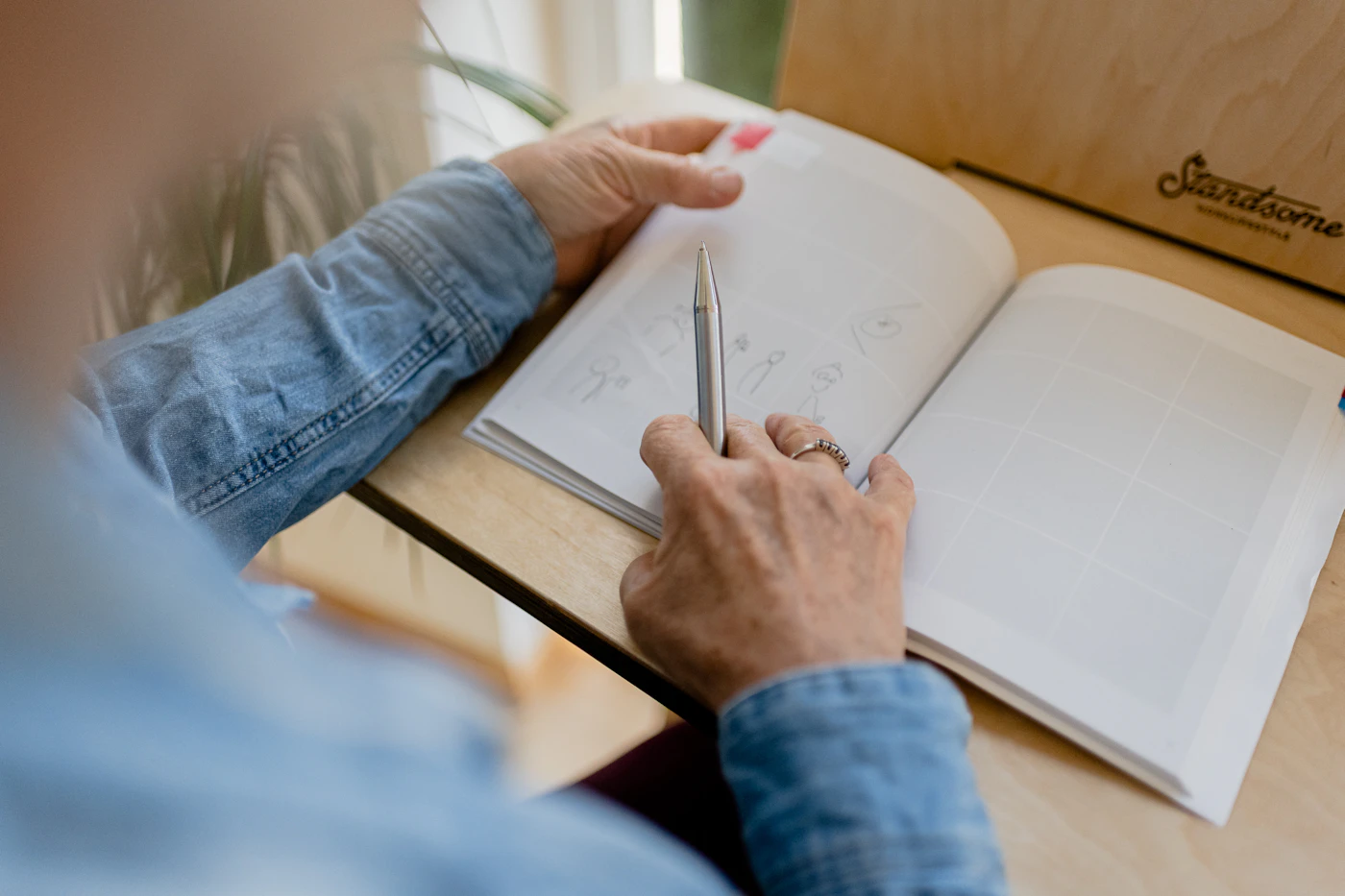
The most effective way to build a sketching habit is to remove the barrier between intention and action. A dedicated corner—however small—signals to your brain that drawing is a normal part of your day, not a special event that requires clearing a table and gathering supplies.
Choose a spot near natural light if possible, but any consistent location works. A fold-down desk, a shelf at standing height, or a sturdy tray on a dresser can all serve as your permanent setup. The key is that the space is always ready. Do not pack your materials away after each session; that added step is often enough to derail a daily practice.
Keep your supplies visible and within arm’s reach. A simple mug for pens and pencils, a small stack of paper, and a clipboard or hardcover book for support are sufficient to start. If you have a wall nearby, tape or pin a few reference images or a sample of your own recent sketches to remind you of your progress.
Consider these elements to keep the space inviting:
- Lighting: A small desk lamp with a flexible neck lets you sketch in the evening without harsh overhead glare.
- Surface: A smooth, non-slip mat or a piece of thick cardboard gives you a portable drawing board that stays in place.
- Storage: Use an open container, not a closed drawer. Seeing the tools is a prompt to use them.
Limit yourself to three or four tool types initially. A pencil, a fineliner pen, an eraser, and a sketchbook are enough. Adding more tools later is fine, but a cluttered space creates mental friction. Keep the corner tidy—wipe the surface occasionally—so it remains a calm, designated zone rather than a catch-all for clutter.
Choosing Your First Materials Without Overthinking
The biggest hurdle for most new sketchers isn’t skill—it’s the belief that they need a specific set of expensive tools. That simply isn’t true. For the first several weeks, the only requirement is that your materials are easy to grab and comfortable to use. You are building a habit, not a collection.
Start with what is already in your home. A standard office pencil and a piece of printer paper are perfectly adequate for practicing line work, basic shapes, and shading techniques. The goal is to sketch regularly, not to produce gallery-ready pieces. Using familiar tools removes the friction of preparation and lowers the pressure to perform.
If you find you enjoy the practice and want a slight upgrade, consider these simple, budget-friendly additions:
- A mid-grade graphite pencil: Look for one labeled “HB” or “2B” on the side. These offer a comfortable balance for both light sketching and darker lines. You only need one for now.
- A pad of drawing paper: A spiral-bound pad of standard sketching paper is helpful. It gives you a dedicated surface and lets you flip back to see your progress. Avoid heavily textured paper at this stage, as it can be harder to control.
- A soft eraser: A white, plastic eraser is a good choice. It is gentle on the paper’s surface and lifts graphite cleanly without tearing. A standard pink eraser works fine, too.
Resist the urge to buy a full set of pencils or a large, elaborate kit. Adding too many variables early on makes it harder to learn the fundamentals. The right time to expand your materials is when you feel a genuine limitation—for example, when you want a deeper shadow than your current pencil can make. That is a clear signal you are ready for the next step, not a reason to purchase ahead of it.
The 10-Minute Daily Sketch: A Small But Powerful Start
Most people abandon a sketching habit because they aim for an hour-long masterpiece before dinner. A more reliable approach is to remove the pressure entirely. Ten minutes is enough time to warm up your hand, train your eye, and prove to yourself that showing up matters more than the result. You are not trying to produce gallery work; you are building a small, repeatable practice.
Keep a sketchbook and a pen or pencil where you normally sit. That is the whole setup. When the ten minutes begin, pick from a short list of options so you do not waste time deciding:
- A single everyday object on your desk—a mug, a pair of glasses, a houseplant leaf.
- A simple shape study—three circles, then two spheres, then one cube, drawn from memory or observation.
- A corner of the room—just the outline of a chair, a lamp, or the fold of a curtain.
- Your non-dominant hand doing something ordinary, like holding a phone or resting on a table.
Set a timer, but do not treat it as a stopwatch. If you finish early, add a second pass of shading or lines. If the timer goes off and you want more, let yourself continue, but only as a bonus. The goal is to make stopping feel okay. That permission keeps the habit from becoming a chore.
To make it stick, tie the sketch to an existing routine. Sketch while your coffee brews or right after you wash the evening dishes. Leave the pen on top of the sketchbook so it invites you in. Do not judge the outcome for the first few weeks. The consistency is the point, and the improvement will come from repetition, not from any single perfect page.
Overcoming the Blank Page: Prompts and Warm-Ups
The hardest part of a sketch is the first thirty seconds. A blank page carries an odd weight, and waiting for inspiration often leads to a stalled habit. A better approach is to start with movement, not judgment. Warm-ups are not about producing a finished piece; they are about reminding your hand and eye to work together again.
Begin with a few minutes of what many artists call “scribble work.” Let your pen move without a goal—loops, hatch marks, or continuous lines that never lift from the page. Pay attention to how much pressure you are applying and how fast you are moving. This simple action loosens the wrist and quiets the inner critic. Another useful practice is blind contour drawing: look only at the object in front of you, not the paper, and trace its edges slowly with your pen. The result will look odd, and that is the point. The exercise builds careful observation skills.
When your hand feels ready, turn to an open-ended prompt. The best prompts are small, specific, and free of quality expectations. Try one of these:
- Draw the contents of your pocket, bag, or desk drawer without arranging them first.
- Sketch a single chair from three different angles, using one minute for each.
- Draw a houseplant or a piece of fruit using only one continuous line.
- Make a map of your daily route, including landmarks you rarely notice.
- Sketch the view outside your window, but stop halfway to finish it from memory.
Choose one prompt before you sit down, and set a low time limit. If the drawing feels forced, move to a new subject or stop for the day. The goal is not a gallery piece; it is to return to the page tomorrow with less friction.
Keeping the Habit Alive: Tracking and Adapting
The most reliable way to maintain a sketching habit is to see it clearly. A simple log—a notebook page, a calendar, or a notes app—works well. Each day you sketch, record the date and a word or two about what you drew. This is not about judging quality; it is about visibility. After a few weeks, the log shows patterns you might otherwise miss, such as which days are naturally easier or what times of day feel most productive.
When life gets busy, the routine should bend, not break. A useful approach is to define a "minimum viable sketch": a basic five-minute gesture drawing or a single object study. On hectic days, this keeps the chain unbroken without adding pressure. You can also shift the time of day or the location. A sketch done while waiting for coffee counts as much as one done at a desk.
- Review weekly. Look at your log each Sunday. Ask what felt easy and what felt forced.
- Change the subject. Repeating the same objects can lead to boredom. Rotate between still life, people, and outdoor scenes.
- Celebrate small wins. Notice when you sketch three days in a row, or when a line comes out cleaner than before. Acknowledgment matters more than a large milestone.
Flexibility is not the enemy of discipline; it is what makes discipline sustainable. If a particular time slot repeatedly fails, move it. If a new pen or pencil adds enjoyment, use it. The goal is not a rigid schedule but a reliable practice that fits the shape of your actual life. When you adapt early, you avoid the all-or-nothing mindset that often ends good intentions. Adjust the routine before you feel the urge to abandon it, and the habit will keep its place in your day.