Why Most Organizing Systems Fail with Kids
Most organizing plans for children collapse not because the kids are messy, but because the system was designed for adults. A labeling scheme with thirty categories, color-coded bins for every type of craft supply, or a strict “everything away before dinner” rule usually ignores two realities: children’s brains are still developing, and their daily routines shift faster than any static layout can keep up with.
The first common pitfall is over-complication. If putting away a single toy requires three steps—open the bin, sort by type, place the lid just so—most young children will simply abandon the job halfway. The same goes for parents: a system that takes twenty minutes to reset after a busy afternoon is one you will quietly stop using by Thursday.
The second pitfall is mismatch with developmental stage. A toddler does not grasp “categories” the way a fourth grader does. A preschooler benefits from broad, open containers where everything visible goes together. An older child can handle labeled shelves, but only if the labels are simple and the spaces match how they actually play, not how you wish they would.
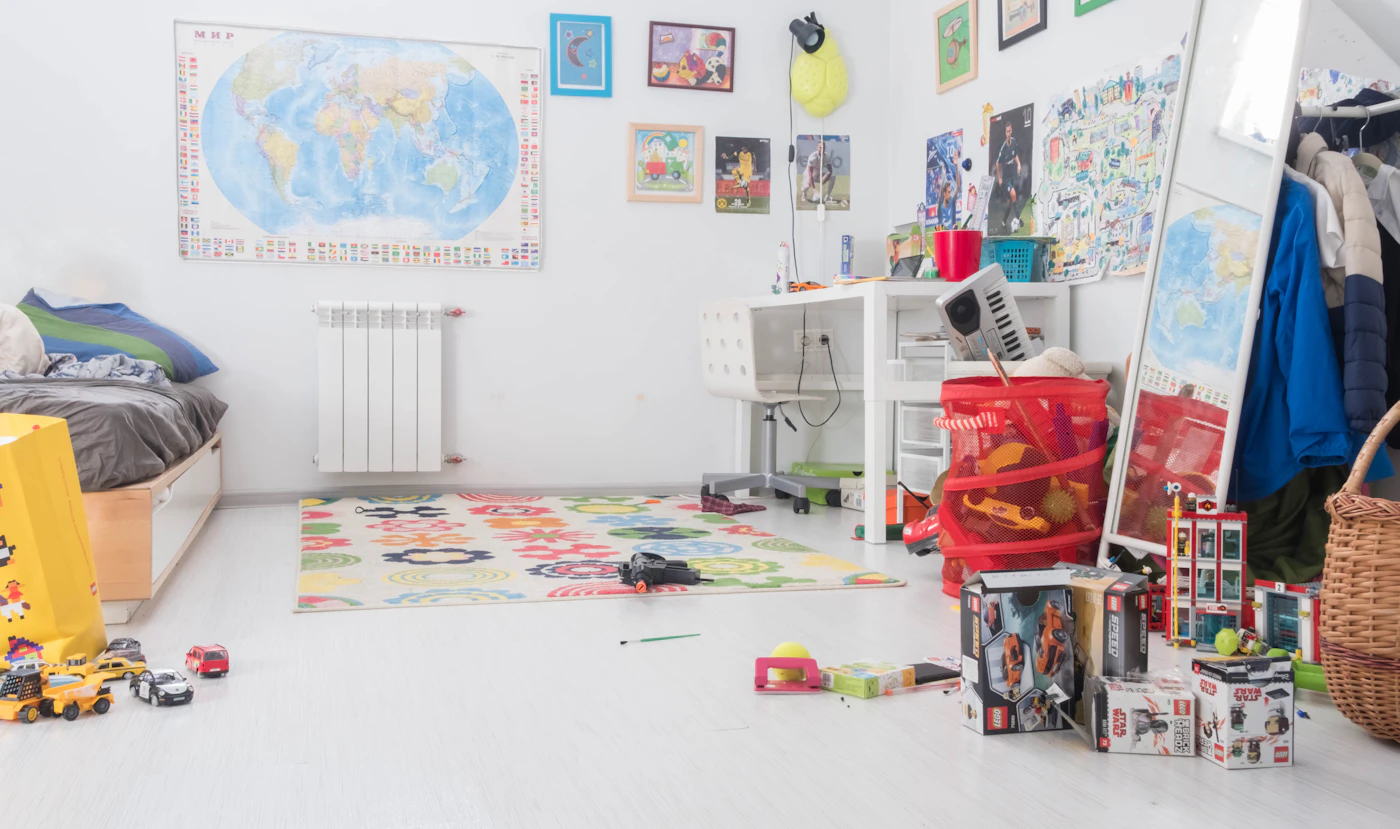
A realistic mindset starts with accepting that some daily clutter is normal. Your goal is not a showroom. It is a rhythm where the heaviest-lifting chores—like sorting outgrown clothes or rotating seasonal gear—happen occasionally, while the everyday reset takes under five minutes. When you design for the child in front of you, not an idealized version, the system has a genuine chance of lasting.
Set Up Zones That Match Real-Life Flow
Most clutter builds up because there’s no obvious “next step” for an item the moment it comes through the door. Instead of assigning everything a permanent home across the whole house, create three simple zones that follow how your day actually moves.
Zone 1: The Landing Spot. Place a low, open basket or a wall hook near the entryway you use most—kitchen door, garage door, or front hall. This is for the items that come in daily: jackets, school bags, library books, permission slips, or a water bottle that needs washing. Label it with a simple tag like “In” or “Dump Here.” The rule is that everything in this zone is dealt with within 24 hours, not left to become a permanent pile.
Zone 2: Daily Use. Keep the things your child reaches for every single morning at kid height in the room where they get ready. That means one drawer for socks and underwear, a low hook for the current coat, and a clear caddy on the bathroom counter for just a toothbrush, comb, and hair ties. If a child has to ask for help or step on a stool to find something, the zone isn’t working.
Zone 3: Overflow and Rotation. Designate one shelf in a closet, or a single plastic bin on a high shelf, for out-of-season gear, hand-me-downs waiting to be worn, or art supplies not in active rotation. This zone is not for daily access. It’s where you put the second winter coat or the next size of shoes until they’re needed.
Use clear, broad labels on each container—picture labels work well for pre-readers. The key is that the system matches your family’s actual habits, not an ideal version of them.
The 10-Minute Daily Reset That Keeps Clutter at Bay
An evening reset works best when it targets the spots where kids naturally drop things: the entryway floor, the living room rug, and the kitchen counter where backpacks land. Set a timer for ten minutes and move through these zones in a consistent order. Start by collecting loose items into a single basket or bin, then sort each item into its designated home. This order prevents you from wandering from room to room and losing focus.
Involve children by giving them one specific, age-appropriate job rather than a vague request to “clean up.” A toddler can place shoes on a low shelf or drop laundry into a hamper. A grade-schooler can sort papers into “keep” and “recycle” piles, or gather stray toys from under the couch. The goal is not perfection—it is building the habit of returning items to the same place every evening, so the morning rush starts with clear floors and clear counters.
Keep a small caddy or drawer near the main living area stocked with basic supplies: a few microfiber cloths, a dustpan, and a bin for stray items. This way, you do not leave the room to hunt for tools, which derails the ten-minute window.
- Start at the front door, then move clockwise through the room.
- Handle papers and school notices immediately—file or recycle before the pile grows.
- Assign each child the same zone nightly, so they know exactly what to expect.
For anything that requires deep cleaning—wiping baseboards, vacuuming under furniture, or washing fabric bins—save that for a weekly or monthly session. The daily reset is about containment, not sanitation. If a spill or sticky spot appears, spot-clean it right away, but do not let the daily sweep turn into a full scrubbing project. That is the surest way to abandon the routine within a week.
A Weekly Sort-Through That Prevents Piles
Block out one half-hour on the same day each week, preferably when the kids are occupied elsewhere. The goal isn’t deep cleaning; it’s catching what drifts to the surface during normal use. Work room by room, carrying a single laundry basket for items that belong elsewhere in the house.
Start in the main living area. Pick up stray toys, cups, and clothing, and drop them in the basket. Wipe down the flat surfaces where small things collect: the coffee table, the entry bench, the shelf near the door. Return the basket’s contents to their proper spots at the end of the session, not in the middle, so you don’t lose momentum.
Next, check the entryway and the kids’ backpacks. Pull out permission slips, finished artwork, and snack wrappers. Sort papers into three quick piles: keep, recycle, and to-do. Hang coats and place shoes on their designated spots. This five-minute sweep prevents the “drop zone” from becoming a permanent mountain.
Finally, do a quick pass on outgrown items. Keep a small donation or hand-me-down bag in the laundry room. When you notice pants that are too short or a toy your child hasn’t touched in weeks, add it to the bag. Once the bag is full, take it to the car. No need to agonize over each piece; if it doesn’t fit or serve a purpose right now, it’s just taking up space.
Restock essentials as you go: refill wipes, art supplies, or fresh socks in the drawers where kids actually get dressed. A weekly rhythm of twenty minutes of tidying and ten minutes of sorting keeps the system honest without turning your home into a project.
Seasonal Culls and Storage Rotation
Twice a year—usually when the clocks change or the school calendar shifts—take an honest look at what your kids actually wear and play with. This is not about perfection; it is about keeping the daily chaos manageable and making sure nothing gets lost in the bottom of a bin for years.
Start with clothing. Pull everything out of drawers and closets and sort into three piles: keep for now, outgrown or worn out, and store for next season. Be realistic. If a shirt has stains that won’t come out or a zipper that jams, it is not worth keeping for a younger sibling. Pass those along to a fabric recycling drop-off if your area has one, or repurpose them as cleaning rags. For items in good shape, bag them up for a local consignment sale, a buy-nothing group, or a friend with younger kids. Do this promptly; a bag in the hallway for three weeks is just clutter with extra steps.
For the out-of-season keep pile, use one clear bin per child, labeled with the size and season. Fold items flat, and don’t bother with vacuum bags unless you have serious space constraints—kids grow fast, and you will need to check sizes again in a few months anyway. Put the bin on a high shelf or under a bed, away from the daily flow.
Toys follow a similar rhythm. Right before a birthday or winter holidays, cull the playroom:
- Set aside broken toys for the trash or recycling, and remove batteries from anything going into storage.
- Donate puzzles and games with all their pieces; if pieces are missing, toss them.
- Rotate a small selection of toys into a closet for a few months. When they come back out, they feel new again without spending a dime.
Make this a recurring calendar reminder, not a grand project. Thirty minutes of sorting per child, twice a year, is enough to keep the system working.
Keeping the Whole Family on Board Without Nagging
The quickest way to wear everyone out is to turn tidying into a daily lecture. Instead, aim for a system that works with your children’s natural habits rather than against them. Start by talking about the “why” in plain terms: when shoes live near the door, nobody hunts for them in the morning, and when library books have a shelf, they don’t get lost under the bed. That conversation works best at a calm moment, not while you’re both already frustrated.
Visual reminders help more than verbal ones. A simple checklist posted at kid-eye level—with pictures for younger children—can show the three or four steps for “coming in from outside” or “getting ready for bed.” Keep the list short and specific:
- Hang coat on the hook.
- Put shoes in the basket.
- Place backpack on the chair.
- Drop lunch bag in the sink.
Resist the urge to redo their work. If the jacket is crooked or the shoe is sideways, leave it. The goal is the habit, not perfection. Praise the effort with a simple “You remembered your hook today” rather than a broad “Good job.”
For building routines, tie tidying to an activity they already do. Clear the table before screen time, or pack the school bag right after brushing teeth. This “stacking” makes the task feel automatic over time. Also, consider a five-minute “reset” before dinner or bedtime where everyone—including adults—puts away their own things. When you’re sorting your own pile alongside them, it feels less like a rule and more like a shared household rhythm. If a child resists, try shortening the task: “Just put the books away, I’ll handle the toys” often breaks the logjam without a battle.